Marco Aurelio Urbino
Love in the Time of CholeraMarco Aurelio Urbino is remembered both as a civic hero in the city’s great cholera epidemic and as one of its most distinguished victims. A physician who directed public-health measures with diligence and courage, he nevertheless relied on methods later judged more charitable than scientific—and in part conducive to the plague’s spread. His death, followed by the discovery of his final letter, transformed his son Juvenal Urbino’s sense of family, mortality, and medical responsibility.
Identity and Public Reputation
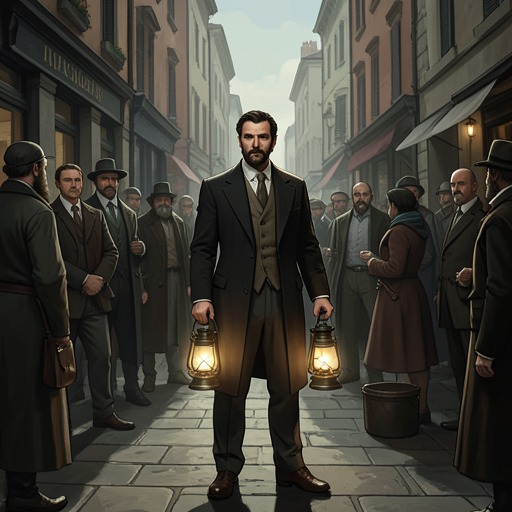
Marco Aurelio was Juvenal Urbino’s father and a highly esteemed physician. During the epidemic, an official decree placed him in charge of designing and directing public-health measures. He went beyond that assignment, intervening in social questions so extensively that, at the crisis’s height, he seemed to exercise the city’s highest authority. The city later honored his diligence, self-sacrifice, and personal courage, and remembered him among its civic heroes.
His reputation was complicated by the consequences of his methods. Years afterward, Juvenal reviewed the record of the epidemic and concluded that his father’s approach had been compassionate but insufficiently scientific, and at points contrary to reason. In Juvenal’s judgment, those choices had helped the disease spread. This reassessment did not cancel Marco Aurelio’s courage or service: the narrative holds his humanitarian impulse and the harmful limits of his practice together, rather than making either the whole of his legacy.
Leadership During the Epidemic
The cholera epidemic overwhelmed the city’s burial grounds and institutions. The cemetery filled, churches and convent grounds could not accommodate the dead, and burial had to be moved to a ranch outside the city that later became the Universal Cemetery. The epidemic struck the larger, poorer Black population especially hard, though it spared no color or background. Its full toll was never established, in part because the community was reticent about private misfortune.
Against this crisis, Marco Aurelio directed public-health efforts under official authority while taking on a wider role in civic life. His intervention is presented as an act of commitment, but also as a source of grave misjudgment: the compassion that animated his methods did not ensure that they were medically sound. The epidemic’s sudden end did not resolve the question of what his response had accomplished. His son’s later reading of the history would make that question personal, forcing him to distinguish devotion from effective care.
Illness, Isolation, and Death
When Marco Aurelio recognized in himself the irreversible symptoms he had seen in other patients, he did not attempt what he considered a futile struggle. He withdrew from others to avoid infecting them and shut himself in a utility room at the Hospital of Misericordia. His colleagues called to him and his family pleaded with him, but he remained apart, separated from both them and the suffering patients crowded into the hospital corridors.
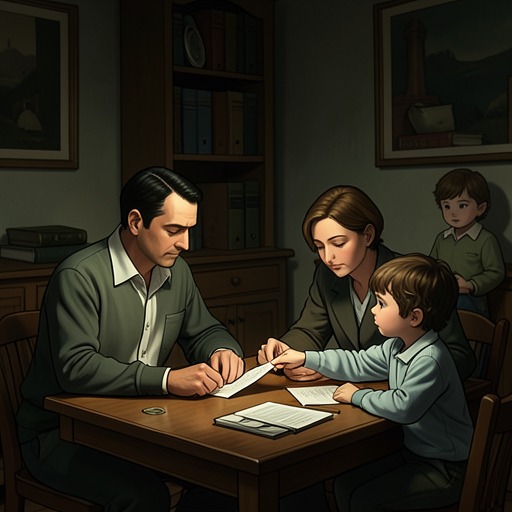
During his isolation, he wrote a twenty-page letter to his wife and children. It was an expression of love and gratitude for his life, and its handwriting deteriorated as his illness advanced. He died without his loved ones seeing him; following his instructions, his body was placed in the communal cemetery with the other victims. The letter thus became the surviving account of a man who, in public, had exercised authority over the epidemic but chose privacy and separation when illness reached his own body.
Juvenal’s Memory and Inheritance
Juvenal was in Paris when a telegram told him of his father’s death. At supper with friends, he raised a glass to Marco Aurelio and called him a good man, but later recognized that he had avoided the reality of the loss rather than allowing himself to grieve. Three weeks afterward, the posthumous letter reached him. Its intimate account of his father’s love and gratitude revealed a depth that Juvenal had not known, despite the life they had shared.
The letter also changed Juvenal’s sense of death. Until then, his family had treated death as a misfortune that happened to other people, while their own lives seemed to unfold gradually into memory and oblivion. The message made mortality unavoidable. It recalled an earlier scene from Juvenal’s childhood: while his son scratched his back, Marco Aurelio remarked that if he died then, Juvenal would scarcely remember him at the same age. More than twenty years later, Juvenal recognized that he had become like his father and was now conscious of sharing his mortality.
Medical Legacy
After his father’s death, Juvenal studied cholera with an intensity that approached penance, learning its forms and training with Professor Adrien Proust, a leading epidemiologist and the creator of the cordons sanitaires. On returning home, he recognized conditions that led him to expect another outbreak. Within less than a year, when students at the Hospital of Misericordia encountered a patient whose unusual blue coloring signaled cholera, Juvenal identified the disease and organized a response: he alerted colleagues and authorities, sought the quarantine of the schooner from Curaçao, and restrained a military commander who wanted to impose martial law and revive the practice of firing a cannon every quarter hour.
Marco Aurelio’s legacy therefore reaches beyond the epidemic he tried to manage. His example supplied Juvenal with both a warning about the limits of compassionate but unsound medicine and a personal motive for mastering the disease. The father’s death sharpened the son’s recognition that medical judgment must answer to consequences, while the final letter gave that inheritance an intimate dimension: the physician Juvenal studied was also the parent whose hidden inner life he had only begun to understand after losing him.